"If all you do is pay attention to what everyone else is paying attention to, then by definition you're not likely to innovate anything or create anything very original or different or surprising." - Rob Walker
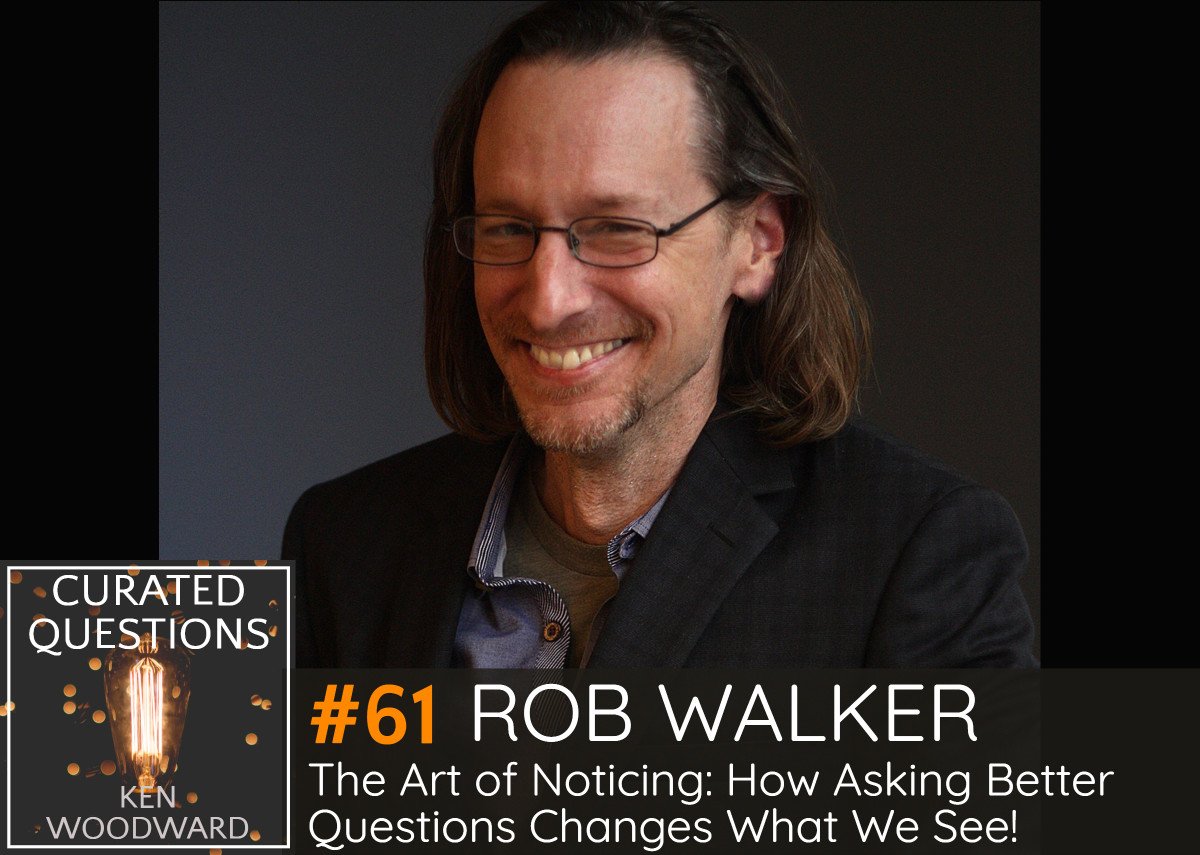
"If all you do is pay attention to what everyone else is paying attention to, then by definition you're not likely to innovate anything or create anything very original or different or surprising." - Rob Walker
Writer and cultural observer Rob Walker joins Ken to explore how questions and noticing reshape the way we move through the world. Rob traces his origin story back to discovering journalism at 18, a framework that gave a shy, introverted kid permission to ask questions on behalf of others.
They dig into his book and newsletter The Art of Noticing, talking about everyday noticing assignments, why “what am I missing?” is a powerful self-question, and how small acts of attention can mark time and make life more memorable.
Rob shares the story behind the Significant Objects project and why story, and not a price tag, creates real value in the objects we keep. From New Orleans as a “conversational city” to his teaching on point of view and manifestos, Rob reflects on questions as both agency and responsibility, in democracies, organizations, and personal life. Be sure to subscribe to Rob's Substack The Art of Noticing newsletter at https://robwalker.substack.com/
This Curated Questions episode can be found on all major platforms and at CuratedQuestions.com.
Keep questioning!
Episode Notes
00:00 Introduction to Overlooked Ideas
01:56 Introducing Rob Walker
03:19 Rob Walker's Early Life and Career
04:28 Discovering Journalism and the Power of Questions
05:54 Embracing Curiosity and Askew Perspectives
08:57 The Influence of Laurie Anderson
13:30 Living in New Orleans
14:56 The Unique Culture of New Orleans
21:21 The Art of Noticing
22:32 Personal Experiences with Noticing
27:50 The Impact of Noticing on Daily Life
33:21 Noticing and Questions
40:56 The Power of Asking Questions
42:39 Questions and Agency
44:26 The Importance of Questions in Organizations
45:14 Inspirations and Heroes in Questioning
46:11 The Art of Asking Questions
46:37 Early Lessons in Journalism
47:42 Challenges of Interviewing Law Firms
48:12 Curiosity-Driven Interviews
48:35 The Sharpie Story
50:15 Preparing for Interviews
50:51 The Flow of Conversation
52:58 Finding Unique Angles in Business Stories
55:09 The Power of Longevity and Community
56:39 Mindfulness and Creativity
59:21 Significant Objects Project
01:01:04 The Value of Story in Objects
01:06:23 The Gift of a Questioning Mindset
01:11:59 Teaching and Point of View
01:12:51 The Role of Questions in Design
01:14:20 Student Challenges with Questions
01:18:57 Personal Reflections on Questions
01:19:25 End of Year Reflections
01:22:48 Final Takeaways and Reflections
Resources Mentioned
Consumed column in the New York Times Magazine
The Art of Noticing by Rob Walker (book)
Buying It by Rob Walker (book)
Lynn Borton of Choose to Be Curious
Laurie Anderson United States Live (album)
Pacifica radio station (Houston)
Brooklyn Academy of Music / BAM
Journey (band)
Foreigner (band)
Hand Grenade (cocktail)
New Orleans Center for Creative Arts (NOCA)
The Art of Noticing (newsletter)
The American Lawyer (publication)
Martindale-Hubbell (legal directory)
Cracker Barrel Logo Controversy
Waking Up Meditation App
Lost Objects Book by Rob Walker
Ignorance by Stuart Firestein (book)
Inconspicuous Consumption newsletter by Paul Lucas
School of Visual Arts in New York
Point of View Class at SVA
Hypothetical Development Organization
Questions Asked
When did you first understand the power of questions?
Is that right that you knew that you were like legitimately curious?
Why does this person behave this way in this situation and not in that situation?
How did this building get to be here?
Why do we seem to believe in these TV shows and not these TV shows?
Who in the world are these people?
How did you get this idea?
How do you think that that region kind of inspires questions?
If you found yourself forced to move in a couple weeks, what's the first thing you think you would miss?
How do I not see it?
Do you have a theory as to why?
Were you looking at something else, or were you lost in your head?
You weren't looking at your phone though?
Anybody here know what phase the moon is in?
What am I missing?
What's the weirdest product that's on display?
Is that an important thing?
Did it make my day better?
Why does the pigeon cross the road?
How have you used questions to dabble around noticing?
What would be the Venn diagram of your experience with noticing and questions?
If you had to only be able to use three condiments for the rest of your life, what would they be?
Anything jump out at you?
So what are your thoughts on questions and agency?
So then, based on that, is it fair to say that it's a good test, in our case a democracy, to see how welcomed questions are or how they're handled?
Why do we do X?
Have you had any folks that have inspired you in how they've used questions?
Have there been folks that you're like, wow, I just love the way that they use a question?
What kind of ignorance can you generate through your experiments?
What do you want to know next?
So you're gonna go and talk to the Sharpie folks; do you come up with like a hundred or 200 questions before you go?
Where did it come from?
How has the design changed?
When did you go through different business models?
How does that work for you and your prep for that in relation to questions?
So then once you're in there, are you just really kind of letting your curiosity lead and really listening?
In your work of doing a bunch of this business work, how is it that you're going about finding the stories?
Is that where it starts from?
What do you think really contributes to the success that you've had there?
What are some contributors?
Have there been any questions that you carry with you, or questions that have just meant a lot to you as you've gone through life?
Do you have a specific question that you carry with you?
How have you been complicit in creating the conditions you say you don't want?
What question are you avoiding that would change everything?
What question are you avoiding?
What questions might be coming next?
What do you want to do?
In that engagement with the students, how are questions a part of that class?
How are the students doing with questions?
What makes your work different?
What makes it you as opposed to just anything else?
Why did you make that decision?
Why didn't you make this other decision?
What are the exact things I need to do to get a passing, or whatever grade?
What do you want to make?
Anything come to mind in the world of questions and Rob Walker and how you view the world?
What are the questions you're wrestling with now?
Is that getting at what you're looking for?
Are you looking for something a little bit different?
Where is the best place for folks to catch up with you or see the things that you're excited about?
What "askew" perspective of yours have you been dampening down that might actually be your most significant professional asset?
How might giving yourself "permission to ask questions" transform a social situation you typically avoid?
What ordinary object in your environment might reveal an extraordinary story if you asked its owner about it?
In your next meaningful conversation, what might you discover if you let your prepared questions go and follow the surprises instead?
What noticing assignment could you give yourself this week that would make your regular routine feel like an adventure?