"The dead don't get a vote, so the living write their lines for them, and the person writing the line is usually the same person who needs the money." - Ken Woodward
"The dead don't get a vote, so the living write their lines for them, and the person writing the line is usually the same person who needs the money." - Ken Woodward
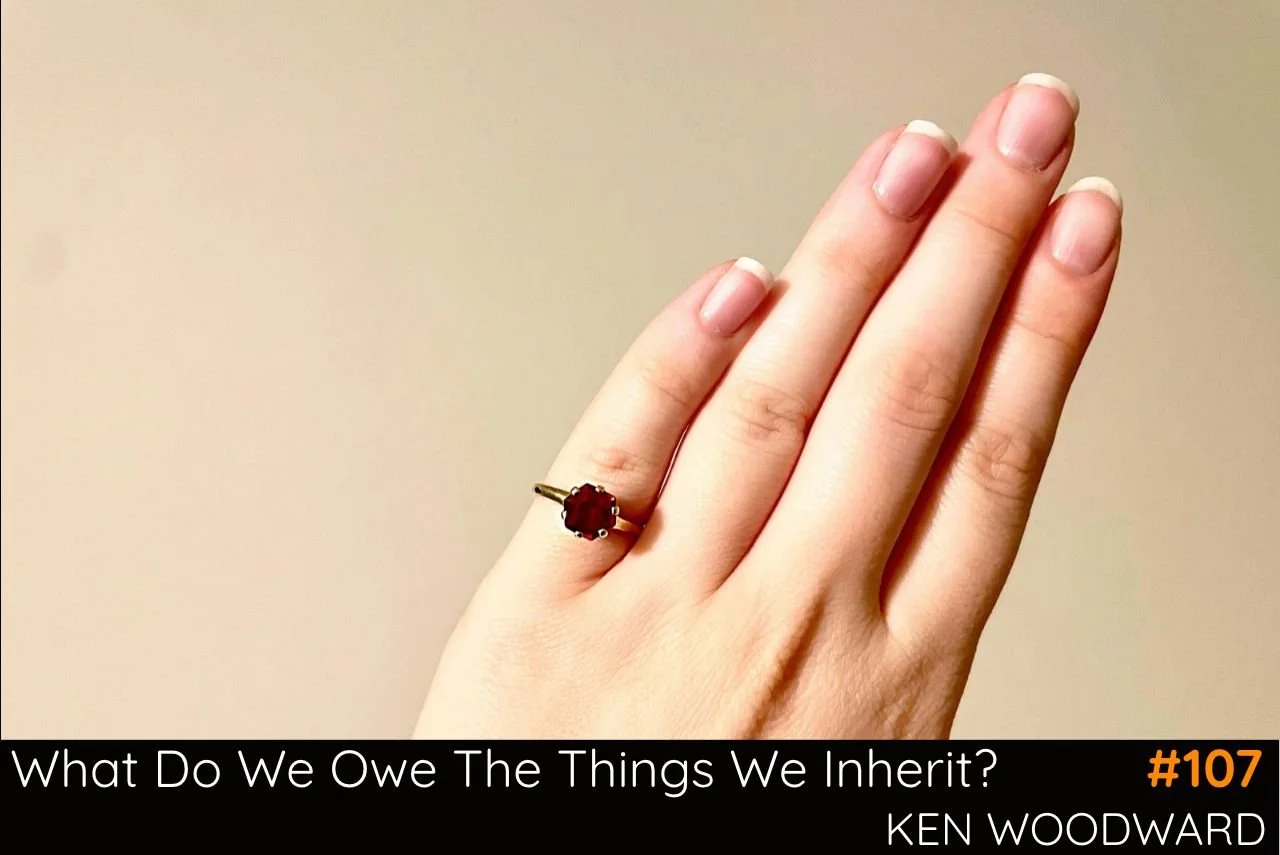
Mom handed me a plastic baggie with a ring and a note card. When she was twelve, her dying step-grandfather let her pick something from his shaving bag, and she chose his first wedding ring. Years later, a jeweler told her the ruby wasn’t real. Three weeks after Mom gave it to me, I gave it to my daughter.
This episode asks where I find value, and who gets to decide. I revisit my conversation with Rob Walker from episode 61 and his Significant Objects experiment, where invented stories turned thrift-store finds into collectibles.
Anil Seth’s work on perception helps me ask what changes when something isn’t what I believed, and what doesn’t.
Then I turn the questions on myself: my great-grandfather’s gold-tipped walking stick that I hold but don’t own, Jerry Colonna’s question about complicity, and what I’m willing to ask of the next generation.
This Curated Questions episode can be found on all major platforms and at CuratedQuestions.com.
Be sure to subscribe to the weekly Curated Questions Dispatch newsletter for more fun with questions and curiosity! (https://substack.com/@curatedquestions)
Keep questioning!
Episode Notes
00:00 The Dead Don't Get A Vote
00:42 Welcome To Curated Questions
02:02 A Ring in a Baggie
02:22 Grandpa Mark’s Gift
02:53 Not a Real Ruby
03:31 Passing It to My Daughter
04:16 Why Objects Matter
05:26 Where Do I Find Value
05:40 Significant Objects Experiment
07:26 Insurance vs Meaning
08:08 Value Lost and Protected
09:15 Perception as Prediction
10:26 The Question I Won’t Ask
11:11 Hold It or Sell It
13:20 The Gold Tipped Walking Stick
15:21 Stories Survive Loss
17:25 Questions to Leave You With